

PeopleFinders is an online people search and public records lookup service that helps users find information about individuals using legally accessible data. Instead of searching dozens of county, state, or federal databases one by one, PeopleFinders aggregates those records into a single, searchable platform.
People typically use PeopleFinders for:
- Finding current or previous contact details
- Identifying unknown phone numbers
- Reconnecting with friends or relatives
- Verifying basic background information
- Conducting informal personal research
This PeopleFinders review focuses on what the service actually does, how reliable it is, and whether it makes sense to pay for it in 2026.
Who this PeopleFinders review is for
This review is written for users who are asking:
- Is PeopleFinders legit for real-world use?
- Is PeopleFinders safe with payment and personal data?
- Does PeopleFinders provide value compared to other people search tools?
- Is the free trial PeopleFinders promotes worth trying?
If you’re evaluating PeopleFinders as a practical research tool, not expecting law-enforcement-level accuracy, this review is designed to give you a clear, unbiased answer.
>> Get PeopleFinders membership for frequent searches >>
How PeopleFinders compares to other people search tools
Compared to similar people search platforms, PeopleFinders positions itself as a broad, general-purpose public records aggregator. It doesn’t specialize in one narrow lookup type; instead, it offers multiple ways to search from the same database.
At a high level:
- PeopleFinders focuses on ease of use and accessibility
- It pulls from multiple public record sources
- It’s designed for informational use, not official screening
This approach makes PeopleFinders appealing for everyday users, though it also comes with limitations that are important to understand.
Quick overview of safety, legitimacy, and pricing
Before diving deeper, here’s a quick snapshot many readers look for:
- Is PeopleFinders legit?
Yes. PeopleFinders is a real, long-running public records search service that uses legally available data sources. - Is PeopleFinders safe?
Generally yes for lawful, personal use. It follows standard web security and privacy practices. - Pricing overview:
- Background Report Membership: around $24.95–$29.95 per month
- Trial-based access: typically a low-cost introductory trial that converts to a monthly plan
- Reverse phone lookup: usually bundled with membership or trial access
We’ll break down pricing in detail later, but this context helps set expectations early.
>> Best for ongoing people search needs >>
What Is PeopleFinders?

Overview of the PeopleFinders Platform
PeopleFinders is a web-based platform that collects, organizes, and presents publicly available information in a readable report format. It does not create private data or access confidential databases; it simply consolidates existing public records.
What PeopleFinders does
At its core, PeopleFinders allows users to:
- Search for individuals by name, phone number, address, or email
- View compiled public records linked to that individual
- Identify patterns such as address history or known associates
The value lies in convenience, not exclusivity. PeopleFinders saves time by centralizing information that would otherwise require manual research.
Types of data it aggregates
Depending on availability, PeopleFinders reports may include:
- Full names and known aliases
- Current and past addresses
- Phone numbers
- Relatives and possible associates
- Age ranges and approximate birth years
- Publicly available court or criminal records
Not every report contains all categories. Results depend on record availability, jurisdiction, and how recently information was updated.
>> Ideal for regular background searches >>
Public record sources explained
A common concern in any PeopleFinders review is where the data comes from.
PeopleFinders aggregates information from sources such as:
- County and state public records
- Property and address registries
- Court filings and legal records
- Voter registration data (where permitted by law)
- Phone and utility-linked public databases
Because these are public records, access is legal, but accuracy and timeliness are not guaranteed.
How PeopleFinders Works
Understanding how PeopleFinders works step by step helps answer questions like is PeopleFinders legit and is PeopleFinders safe to use.
Search process explained step by step
A typical PeopleFinders search follows this flow:
- Select a search type
Choose name search, reverse phone lookup, address search, or email search. - Enter basic details
Adding a city or state improves accuracy, especially for common names. - Database matching
PeopleFinders scans its aggregated public records for potential matches. - Preview results
You’re shown possible matches to confirm you’ve selected the right person. - Unlock detailed reports
Full details require creating an account and selecting a trial or membership.
This process is designed to be quick and user-friendly, even for first-time users.
What happens after you enter a name or phone number
Once a search is submitted:
- PeopleFinders cross-references multiple datasets
- Likely matches are compiled into preview summaries
- Users are prompted to unlock full reports via trial or membership
This is where many users encounter free trial PeopleFinders messaging. It’s important to understand that previews are limited, and full access requires agreeing to the pricing terms explained during checkout.
Is PeopleFinders Legit?
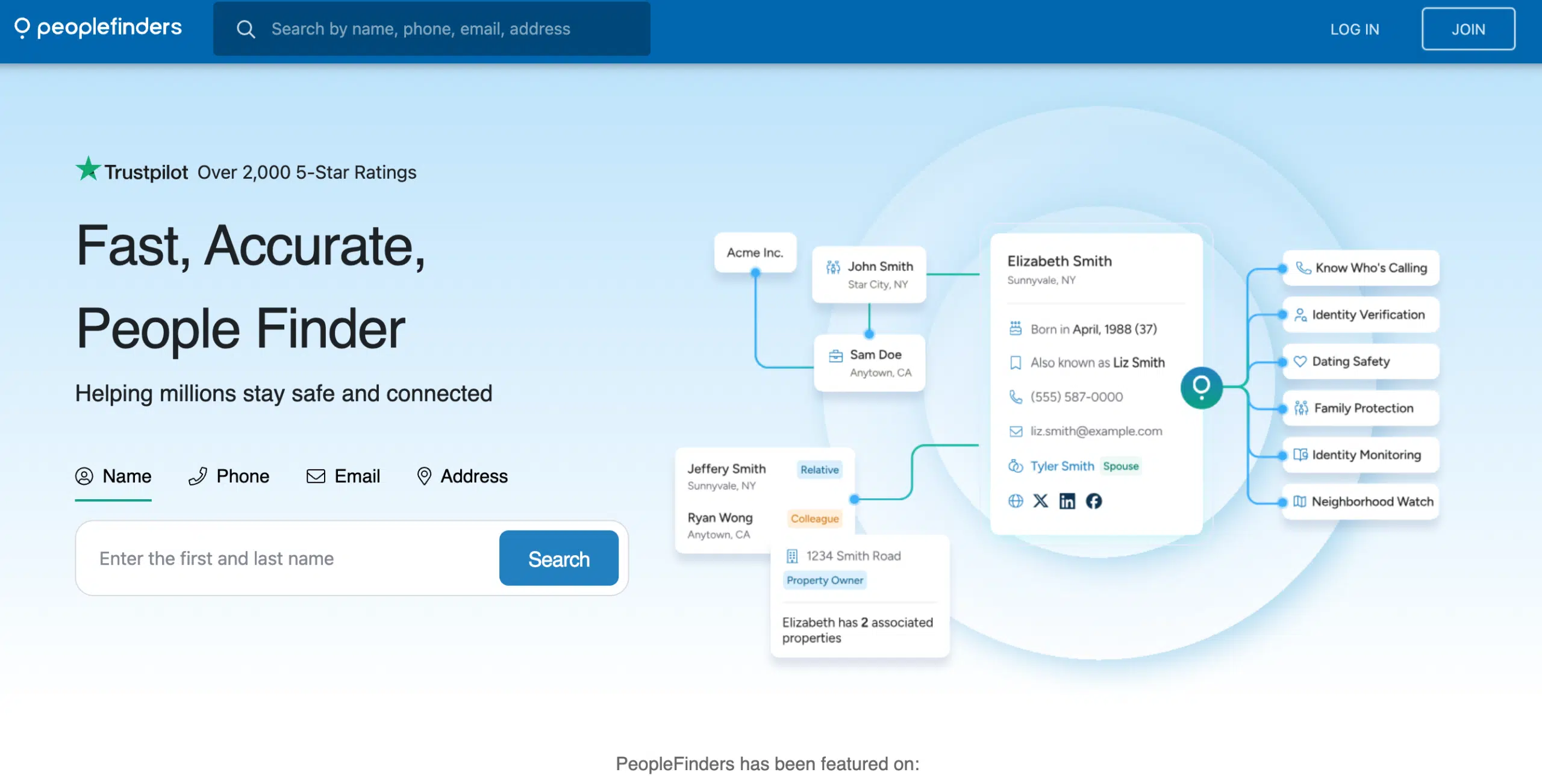
When readers ask is PeopleFinders legit, they’re usually trying to determine whether the service is real, lawful, and worth trusting, not whether it’s perfect. This section breaks legitimacy down by company history, data practices, and real-world use.
>> Choose PeopleFinders membership for unlimited searches >>
Company Background and History
How long PeopleFinders has been operating
PeopleFinders has been operating for many years as a U.S.-based public records search platform. Longevity matters in this industry: services that fail to meet legal or consumer standards tend to disappear quickly. PeopleFinders’ continued operation suggests sustained compliance with evolving privacy and data regulations.
Over time, the platform has adapted to:
- Changes in public record digitization
- Increased consumer privacy expectations
- Clearer disclosures around permissible use
This history supports the conclusion that PeopleFinders is a legitimate, established service, not a fly-by-night website.
Business model and data sourcing
PeopleFinders uses a subscription and trial-based business model. Rather than selling individual records, it aggregates public information and provides access through memberships.
Key points:
- Data comes from publicly accessible records, not private or hacked sources
- The service organizes and indexes existing data; it does not generate new information
- Revenue is derived from user subscriptions not selling user search data
Understanding this model helps explain both the platform’s value and its limitations.
Is PeopleFinders a Scam or a Real Service?
Transparency of reports
A common way to distinguish a scam from a real service is transparency. PeopleFinders:
- Provides preview results before payment
- Discloses that information is sourced from public records
- Includes disclaimers about possible inaccuracies or outdated data
Scam platforms typically hide these details. PeopleFinders does not, though some disclosures may appear during checkout rather than upfront, something users should read carefully.
User expectations vs reality
Many negative experiences stem from expectation mismatches, not deception.
Common assumptions:
- Reports will always be fully accurate
- Information will be updated in real time
- “Free trial” means unlimited free access
Reality:
- Public records can lag behind real-world changes
- Some data may be missing or incomplete
- Trial access is limited and usually converts to a paid plan
When expectations align with how public-record services actually work, most users find PeopleFinders functions as described, supporting the conclusion that it is a real service, not a scam.
Who Should (and Shouldn’t) Use PeopleFinders
Appropriate legal and ethical use cases
PeopleFinders is best used for personal, informational research.
Appropriate uses include:
- Reconnecting with friends or family
- Verifying contact information
- Identifying unknown phone numbers
- General curiosity using lawful public data
These uses fall squarely within what PeopleFinders is designed for.
Who should avoid using PeopleFinders
PeopleFinders should not be used if you need:
- Employment background checks
- Tenant or housing screening
- Credit, insurance, or lending decisions
Using PeopleFinders for these purposes is ineffective and may be illegal, this distinction is critical when evaluating whether the service is appropriate for your needs.
Is PeopleFinders Safe to Use?
Safety concerns usually fall into two categories: technical security and how the information is used. Both matter when asking is PeopleFinders safe.
Data Security and Privacy Practices
How user searches are handled
PeopleFinders states that:
- Searches are processed through secure servers
- Search subjects are not notified when looked up
- User activity is handled according to its privacy policy
From a user standpoint, this aligns with standard practices for people search platforms and allows discreet, private searches.
Payment and account security
When users unlock reports or start a trial:
- Payments are processed through encrypted checkout systems
- Accounts are protected using standard authentication measures
- Billing terms are tied to the selected plan or trial
As with any subscription service, users should still review billing terms and manage cancellations on time, but there’s no indication that PeopleFinders poses unusual payment-security risks.
Is PeopleFinders Safe for Background Checks?
Accuracy considerations
This is where “safe” becomes contextual. PeopleFinders relies on public records, which means:
- Information may be outdated
- Records can vary by state or county
- Errors can exist in the underlying data
Because of this, PeopleFinders should not be treated as authoritative proof. Acting on unverified information, especially for serious decisions, can create problems.
Limitations of public records
Public records themselves have constraints:
- Not all records are digitized
- Some updates take weeks or months to appear
- Certain records may be sealed or expunged
These limitations apply across the entire industry, not just to PeopleFinders.
Legal Compliance and Fair Use
FCRA disclaimer explained
PeopleFinders clearly states that it is not a Consumer Reporting Agency (CRA) under the Fair Credit Reporting Act (FCRA).
This means reports cannot be used for:
- Employment decisions
- Tenant screening
- Credit or loan approvals
- Insurance eligibility
This disclaimer is central to understanding both legality and proper use.
What PeopleFinders cannot be used for
To remain compliant, PeopleFinders must not be used for:
- Hiring or firing decisions
- Housing approvals or denials
- Financial eligibility determinations
Legal risk arises from misuse, not from the service itself.
PeopleFinders Services Overview
This section clearly outlines everything PeopleFinders offers, helping both readers and search engines understand the platform’s full product coverage. Rather than a single lookup tool, PeopleFinders operates as a multi-service public records platform designed around common search needs.
List of PeopleFinders Services
PeopleFinders organizes its features by how users typically start a search. While the underlying data sources often overlap, each service is optimized for a specific use case.
Background report memberships
This is the primary paid offering. A background report membership provides ongoing access to detailed public-records-based reports across unlimited searches during the billing period.
Typical uses include:
- Running multiple searches over time
- Conducting ongoing personal research
- Accessing full reports without repeated checkouts
Most of the depth discussed in a typical PeopleFinders review comes from this membership.
>> Try PeopleFinders Membership Now! >>
Reverse phone lookup
Reverse phone lookup helps identify unknown callers by matching a phone number to publicly available information such as possible owner names, carrier details, and associated locations (when available).
This feature is commonly used for:
- Unknown or repeated calls
- Screening potential spam or scam numbers
- Basic caller verification
Access is usually bundled with a membership or introduced via trial-based access.
>> Get a Reverse Phone Lookup Now! >>
Name search
Name search is the most flexible entry point and often the starting step for deeper reports.
Users can search by:
- First and last name
- City or state to improve accuracy
Name search helps narrow down potential matches before unlocking full report details.
Trial-based background reports
PeopleFinders also offers trial-based access to background reports. These trials:
- Provide short-term, limited access
- Require payment details upfront
- Convert to a monthly membership unless canceled
Understanding trial terms is essential when evaluating value and billing expectations.
>> Try PeopleFinders Name Search Now! >>
PeopleFinders – Background Report Membership
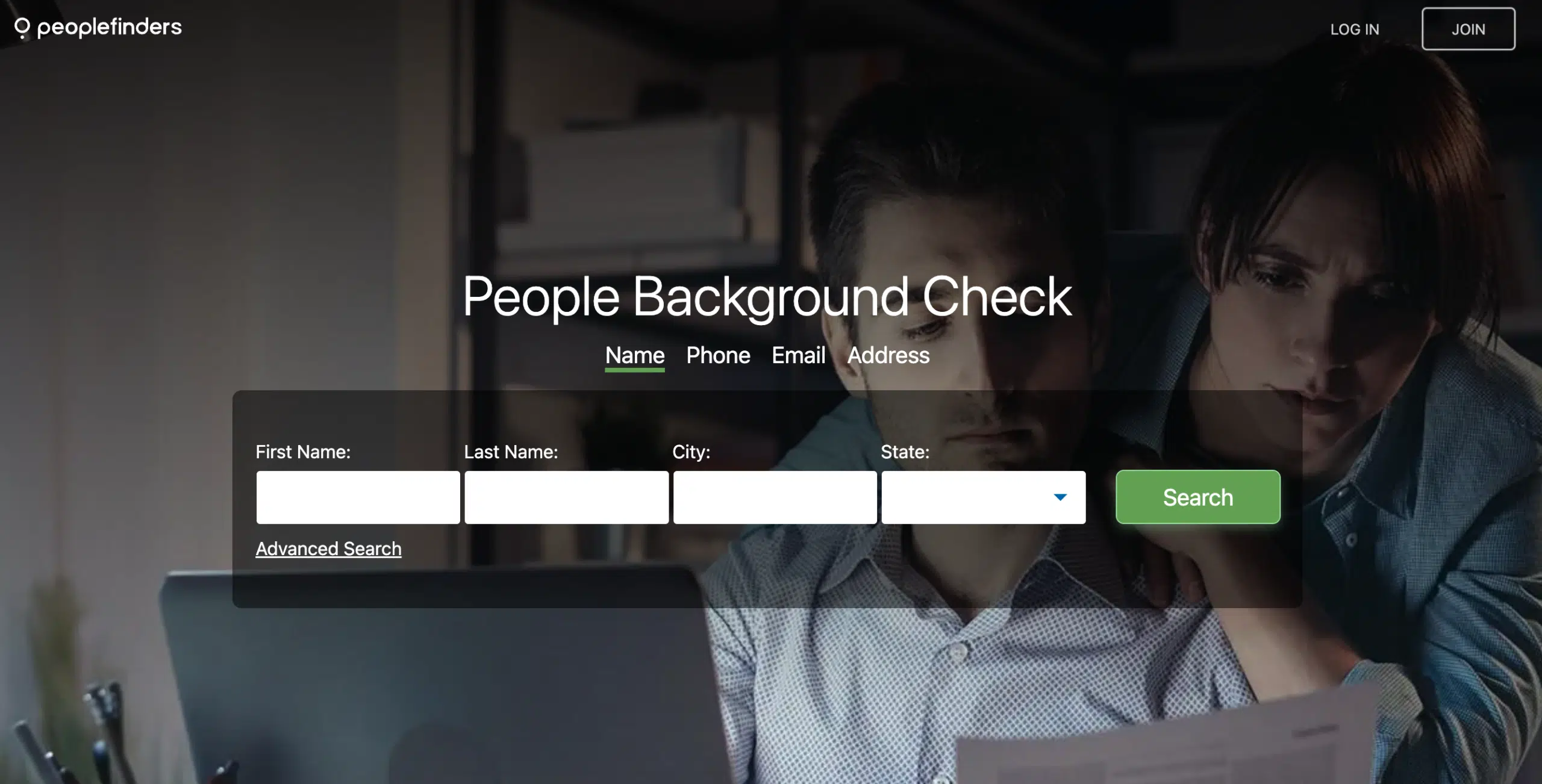
The Background Report Membership is the most comprehensive way to use PeopleFinders. It’s built for users who need ongoing access rather than a single lookup.
What the Background Report Membership Includes
Report contents vary by individual and jurisdiction, but memberships commonly unlock the following categories of public information.
Criminal records
Where legally available, reports may include:
- Misdemeanor and felony records
- Arrest records (not always convictions)
- Case numbers and jurisdictions
Records may be incomplete or outdated, and sealed or expunged cases may not appear.
Address history
Address history is one of the most consistently available data points.
Reports often show:
- Current and previous addresses
- Approximate move timelines
- Associated names at those locations
This is frequently used to confirm residency or track location changes over time.
Relatives and associates
PeopleFinders may list:
- Possible relatives
- Household members
- Individuals linked through shared addresses
These connections are inferred from public records and should be viewed as contextual, not definitive.
Court records and public filings
Depending on availability, reports may include:
- Civil court cases
- Traffic-related filings
- Bankruptcy records (where public)
- Other non-confidential legal documents
Availability varies widely by state and county.
Background Report Membership Pricing
Pricing:
Monthly membership structure
- Standard Background Report Membership: approximately $24.95 per month
- Premium / Expanded Membership: approximately $29.95 per month
Memberships typically include:
- Unlimited searches during the active billing period
- Access to full background-style public records reports
Introductory pricing may be offered for the first month, but regular rates apply after the initial period.
Auto-renewal explanation
- Memberships auto-renew monthly by default
- Billing continues until canceled
- Cancellation must be completed through the account dashboard before the next billing date
Most billing complaints arise from missed cancellations rather than undisclosed fees.
Who Should Buy the Membership
Frequent users
The membership makes sense if you:
- Plan to run multiple searches
- Need flexibility without paying per report
- Want consistent access to full reports
Ongoing research needs
This option is best for:
- Long-term personal research
- Repeated reverse phone lookups
- Verifying multiple individuals over time
>> Best for ongoing PeopleFinders access >>
PeopleFinders – Reverse Phone Lookup
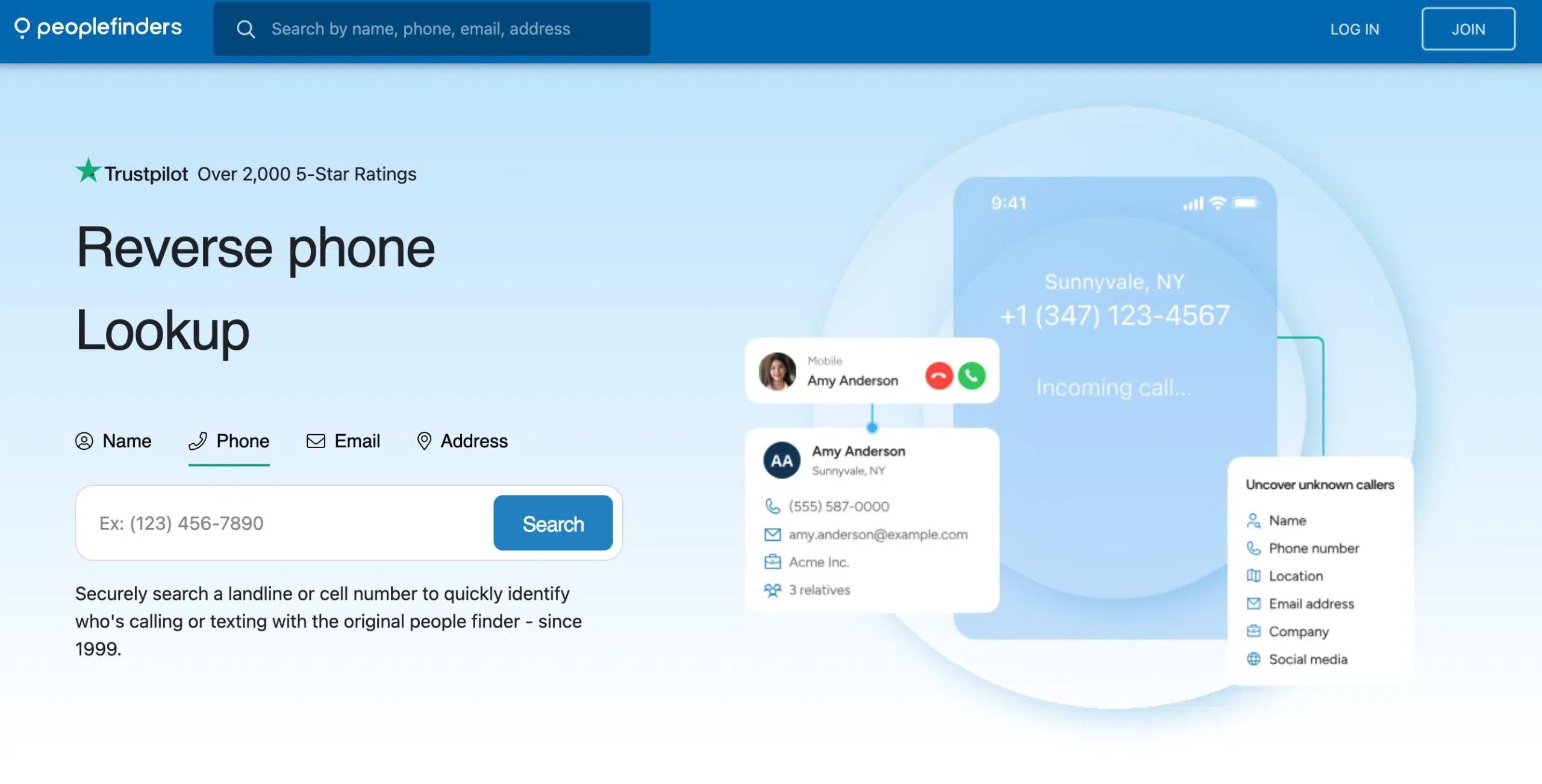
The Reverse Phone Lookup feature is one of the most practical tools inside PeopleFinders, especially for users trying to understand who’s behind an unfamiliar number before responding.
What Reverse Phone Lookup Shows
Results depend on data availability, but PeopleFinders reverse phone lookup commonly surfaces the following:
Caller identity
When a match exists, reports may show:
- A possible name associated with the number
- Known aliases tied to that number
- Whether the line appears residential or business-related
Mobile numbers are harder to match than landlines, so results can vary.
Carrier details
PeopleFinders may also display:
- The telecom carrier linked to the number
- Whether the line is mobile or landline
- A general geographic region
Carrier data is useful for spotting spoofed or suspicious numbers.
Associated addresses
In some cases, reverse phone lookup reports include:
- Current or previous addresses linked to the number
- City or state history
- Household associations
This context helps users decide whether a call is likely personal, commercial, or spam-related.
Reverse Phone Lookup Pricing
Per-search or bundled access explanation
PeopleFinders does not typically offer a true pay-per-phone-number model.
- Reverse phone lookup is usually bundled with the Background Report Membership
- It may also be accessible through trial-based access tied to a report unlock
Pricing context:
- Background Report Membership: approximately $24.95–$29.95 per month
- Trial access: typically a low-cost introductory offer that converts to a monthly plan
This bundled approach is important to understand before unlocking results.
Best Use Cases for Reverse Phone Lookup
Unknown calls
Reverse phone lookup works best when you:
- Receive repeated calls from unfamiliar numbers
- Want to know who’s calling before answering
- Need quick context without engaging directly
Scam prevention
While not a guaranteed scam detector, PeopleFinders can help:
- Flag numbers with inconsistent or missing data
- Identify whether a number appears tied to a real person
- Add context before calling back
Used cautiously, it’s a helpful screening layer.
>> Ideal for repeated unknown call lookups >>
PeopleFinders – Background Report with Trial
The background report with trial is often the first paid experience users have with PeopleFinders and it’s also where most confusion around the phrase free trial PeopleFinders comes from.
How the PeopleFinders Free Trial Works
Trial structure explained
PeopleFinders typically offers a short-term trial that:
- Unlocks limited access to background reports
- Requires payment information upfront
- Is designed to preview report depth rather than provide full access
The trial is meant as an evaluation window, not a long-term solution.
What “free trial PeopleFinders” actually means
Despite the wording, free trial PeopleFinders usually means:
- A low-cost introductory trial, not $0 access
- Limited time (often 1–3 days)
- Automatic conversion to a monthly membership unless canceled
Understanding this distinction is essential to avoiding billing surprises.
Trial Pricing and Conversion to Paid Plans
Introductory pricing
Trial offers commonly appear as:
- $0.95 to $3.95 for short-term access
- Reduced entry pricing to test report depth
Exact offers can vary based on entry point and promotion.
What happens after the trial ends
If the trial is not canceled:
- Access converts to the Background Report Membership
- Monthly billing begins at approximately $24.95–$29.95
- Billing continues until canceled through the account dashboard
Most negative experiences stem from missed cancellation timing, not hidden charges.
Is the PeopleFinders Trial Worth It?
Pros
The trial makes sense if you:
- Want to test report depth before committing
- Only need information for a short period
- Prefer minimal upfront cost
Limitations
The trial may not be ideal if:
- You need ongoing access
- You plan to run multiple searches
- You don’t want to monitor cancellation deadlines
For long-term use, the full membership is usually more practical.
>> Try low-cost PeopleFinders trial first >>
PeopleFinders – Name Search
The Name Search feature is the backbone of PeopleFinders. It’s the most commonly used option when you don’t have a phone number or address and want to start with basic identifying information.
What You Can Find with a Name Search
PeopleFinders scans aggregated public records to build profiles around the name you enter. Results depend on availability and record quality, but typically include the following.
Full names
Name search results often show:
- Legal full names
- Middle names or initials
- Known name variations
This helps confirm whether you’re viewing the correct individual before opening a full report.
Aliases
In some cases, PeopleFinders may surface:
- Alternate spellings
- Previous legal names
- Name variations tied to public filings
Aliases are drawn from public records such as court documents or address histories, not private or social media sources.
Location history
Location data is one of the strongest aspects of name search.
Reports may include:
- Current and past cities or states
- Partial address history
- Approximate timelines of residence
This is especially useful for reconnecting with someone who has moved or confirming whether two records refer to the same person.
Name Search Accuracy and Limitations
A realistic PeopleFinders review needs to address accuracy clearly.
Common names vs unique names
Accuracy varies significantly based on how common a name is.
- Common names
- More potential matches
- Higher chance of overlapping records
- Requires filtering by location or age
- Unique names
- Fewer results
- Cleaner report matches
- Faster confirmation
Adding a city or state greatly improves name search accuracy, especially for common surnames.
Name Search Pricing
Included with membership or trial
- Name search is included with the Background Report Membership (approximately $24.95–$29.95 per month)
- It’s also accessible during trial-based access, which typically starts at $0.95–$3.95 and converts to a monthly plan unless canceled
There is usually no standalone pay-per-name-search option; access is bundled into broader plans.
>> Good for reconnecting or identity checks >>
PeopleFinders Review: Pros and Cons
No review is complete without a balanced look at strengths and trade-offs. Below is an objective summary based on how PeopleFinders performs in real-world use.
Pros of PeopleFinders
Large public records database
PeopleFinders aggregates data from a wide range of public record sources, allowing users to access information that would otherwise require multiple manual searches.
Multiple search types
PeopleFinders offers:
- Name search
- Reverse phone lookup
- Address-based searches
- Background-style public record reports
This flexibility makes it useful across different lookup scenarios rather than a single-purpose tool.
Easy-to-use interface
The platform is designed for everyday users:
- Simple search forms
- Guided result previews
- Minimal learning curve
Most users can navigate PeopleFinders without technical experience, which is a consistent positive point in PeopleFinders reviews.
Cons of PeopleFinders
Not real-time data
Because PeopleFinders relies on public records:
- Updates can lag behind real-world changes
- Recently changed information may not appear immediately
- Some records may be outdated
This limitation applies to all public-record-based services.
Subscription-based pricing
Access is tied to:
- Trial offers that convert to subscriptions
- Monthly memberships with auto-renewal
Users who only need a single lookup may find this model less appealing.
Not FCRA-compliant
PeopleFinders is not a Consumer Reporting Agency.
It cannot be used for:
- Employment background checks
- Tenant screening
- Credit or insurance decisions
Using the service for these purposes is not permitted and may create legal risk.
PeopleFinders Pricing Summary (All Services)
Pricing is one of the most important factors in deciding whether PeopleFinders is worth using. Below is a clear, up-to-date breakdown of PeopleFinders pricing, explained without ambiguity so users know exactly what to expect.
Breakdown of All Pricing Options
Background Report Membership
The Background Report Membership is the main paid plan and the most complete way to use PeopleFinders.
Current pricing:
- Standard Membership: approximately $24.95 per month
- Expanded / Premium Membership: approximately $29.95 per month
What this includes:
- Unlimited name searches
- Reverse phone lookup access
- Full background-style public record reports
- Access remains active as long as the subscription is active
This option is best for users who expect to run multiple searches over time.
Reverse Phone Lookup
Reverse phone lookup pricing is not offered as a true one-time purchase.
Instead:
- It is included with the Background Report Membership
- Or accessed through trial-based entry offers
This bundled model means users looking up multiple numbers will benefit more from a membership than repeated trial access.
Trial-based reports
Trial-based access is often marketed as free trial PeopleFinders, but it’s important to understand how it works.
Typical trial pricing:
- $0.95 – $3.95 for short-term access (usually 1–3 days)
Trial access:
- Unlocks limited background reports
- Requires payment information upfront
- Converts automatically to a paid membership unless canceled
The trial is designed for evaluation, not long-term use.
Hidden Fees and Auto-Renewals Explained
A major concern in any PeopleFinders review is billing clarity. Here’s how it works in practice.
Billing transparency
PeopleFinders does disclose:
- Trial duration
- Conversion to monthly billing
- Recurring subscription terms
However, these details are typically shown during checkout, so users must read them carefully before confirming payment.
There are no surprise add-on fees, but auto-renewal is standard.
Cancellation tips
To avoid unwanted charges:
- Cancel before the trial or billing cycle ends
- Use the account dashboard, not email alone
- Save cancellation confirmation for reference
Most billing complaints stem from missed cancellations, not undisclosed pricing.
Accuracy and Reliability of PeopleFinders
Accuracy is where expectations matter most. PeopleFinders can be useful, but only when its data limitations are clearly understood.
How Accurate Is PeopleFinders Data?
PeopleFinders relies entirely on public records, which introduces unavoidable constraints.
Public record delays
Public databases are not updated in real time.
This means:
- Address changes may take weeks or months to appear
- Court filings can lag behind actual case outcomes
- Phone number ownership may not be current
These delays are normal for public-record-based services and are not unique to PeopleFinders.
Common mismatches
The most frequent accuracy issues involve:
- Common names
- Shared addresses
- Family members with similar identifiers
For example, two people with the same name in the same city may appear in overlapping records. This is a data-structure issue, not a system error.
How to Improve Search Accuracy
While no people search tool is perfect, users can significantly improve results by using PeopleFinders strategically.
Using filters
Accuracy improves when you:
- Add a city or state
- Use approximate age ranges
- Review relatives and address history
Even one additional filter can greatly reduce mismatches.
Combining search types
The most reliable approach is cross-verification:
- Start with a name search
- Confirm using reverse phone lookup
- Validate using address history
Using multiple data points together provides better confidence than relying on a single report.
PeopleFinders vs Competitors
When evaluating whether PeopleFinders is worth using, it helps to see how it compares to other well-known people search platforms. Below is a practical, experience-based comparison focused on data coverage, pricing model, and ideal use cases.
PeopleFinders vs BeenVerified
BeenVerified is often compared directly with PeopleFinders because both target similar users looking for public-record-based background information.
Key differences:
- Data depth
- PeopleFinders: Strong on public records, address history, and court filings
- BeenVerified: Often includes more lifestyle and social-style data points
- Pricing model
- PeopleFinders: Typically $24.95–$29.95/month
- BeenVerified: Often priced slightly higher depending on plan
- Use case fit
- PeopleFinders: Better for structured public records research
- BeenVerified: Appeals to users wanting broader, less formal profiles
If your priority is traditional public record aggregation rather than enhanced profiles, PeopleFinders is usually the more straightforward option.
PeopleFinders vs Spokeo
Spokeo positions itself differently, blending public records with online and social data.
Key differences:
- Data sources
- PeopleFinders: Primarily public records and official filings
- Spokeo: Mix of public records and online presence indicators
- Accuracy style
- PeopleFinders: Structured, document-based records
- Spokeo: Broader but sometimes less precise for formal data
- Pricing
- PeopleFinders: Mid-range subscription pricing
- Spokeo: Often slightly cheaper entry plans, but limited depth
Spokeo may feel more casual, while PeopleFinders is better suited for users who want record-oriented information rather than digital footprints.
When PeopleFinders Is the Better Choice
PeopleFinders tends to be the better choice if you:
- Prefer public-record-focused reports
- Need address history, court records, or structured data
- Plan to run multiple searches over time
- Want a balance between depth and ease of use
It’s less ideal if you’re looking primarily for social media insights or one-off casual lookups.
PeopleFinders Opt-Out and Data Removal
Data removal is an important trust factor for many users. Understanding why your data appears on PeopleFinders and how to remove it helps address privacy concerns directly.
Why Your Data Appears on PeopleFinders
Your information appears on PeopleFinders because:
- It exists in public records
- It’s legally accessible under U.S. public record laws
- Data aggregators compile and organize these records
Common sources include:
- Property and address records
- Court filings
- Voter registrations (where permitted)
- Utility-linked public databases
PeopleFinders does not create this data, it aggregates what already exists publicly.
How to Opt Out of PeopleFinders
PeopleFinders provides a formal opt-out process for users who want their information removed from public search results.
Step-by-step opt-out overview
The general opt-out process involves:
- Visit the PeopleFinders opt-out page
- Search for your name and location
- Identify the record that matches you
- Submit a removal request
- Verify your request via email
You typically do not need to create a paid account to opt out.
How Long Removal Takes
After submitting a request:
- Removal usually begins within a few days
- In some cases, it may take up to a couple of weeks
- Your record should no longer appear in public PeopleFinders searches
Important notes:
- Removal applies only to PeopleFinders, not other data brokers
- Data may reappear if public records are updated later
- Periodic re-checking is recommended
FAQs About PeopleFinders
This section addresses the most common trust, safety, and billing questions users search for before deciding whether to use PeopleFinders. The answers below are clear, practical, and aligned with how the service actually works.
Is PeopleFinders legit for background checks?
PeopleFinders is legit, but only for informational background research, not official background checks.
PeopleFinders:
- Aggregates legally accessible public records
- Organizes that data into readable reports
- Does not verify or certify information
Important limitation:
- PeopleFinders is not FCRA-compliant
- It cannot be used for employment, tenant screening, credit, insurance, or lending decisions
So if the question is “is PeopleFinders legit?” the answer is yes, as long as it’s used for personal research and not regulated screening.
Is PeopleFinders safe to enter payment details?
For most users, PeopleFinders is safe from a payment and account security standpoint.
What PeopleFinders does:
- Uses encrypted checkout and secure payment processors
- Requires account login to manage billing and cancellation
- Follows standard privacy and data-handling practices
What users should still do:
- Read trial and auto-renewal terms carefully
- Track billing dates
- Cancel on time if access is no longer needed
Most safety concerns stem from billing misunderstandings, not compromised payment information.
Does PeopleFinders offer a free trial?
PeopleFinders offers trial-based access, commonly referred to online as free trial PeopleFinders, but it’s important to understand what that means.
In practice:
- The trial is usually low-cost, not completely free
- Pricing typically ranges from $0.95 to $3.95
- Payment details are required upfront
- The trial converts to a monthly membership unless canceled
The trial is designed to let users preview report depth before committing.
Can you cancel PeopleFinders easily?
Yes, cancellation is generally straightforward if done correctly.
Best practices:
- Cancel through the account dashboard
- Do so before the next billing cycle
- Save confirmation emails or screenshots
PeopleFinders does not intentionally block cancellations, but timing matters—missed deadlines are the most common issue.
Final Verdict: Is PeopleFinders Worth It?
After reviewing features, pricing, accuracy, safety, and limitations, the answer to “Is PeopleFinders worth it in 2026?” depends entirely on how often you plan to use it and what you expect from the data.
Best for frequent searches
PeopleFinders offers the most value if you:
- Run multiple searches regularly
- Need ongoing access to public records
- Want unlimited lookups under one monthly plan
For these users, the background report membership is the most practical option.
Best for reverse phone lookups
PeopleFinders performs well for:
- Identifying repeated unknown callers
- Screening suspicious or spam numbers
- Verifying basic caller information
It’s especially useful when reverse phone lookups are needed more than once.
Who should avoid it
PeopleFinders may not be a good fit if you:
- Need real-time or guaranteed-accurate data
- Require FCRA-compliant background checks
- Only need a single lookup one time
- Prefer true pay-per-search pricing
In those cases, the subscription model may feel unnecessary.
Overall PeopleFinders review summary
Strengths
- Large public records database
- Multiple search types in one platform
- Easy-to-use interface
- Legitimate, long-running service
Limitations
- Not real-time data
- Subscription-based pricing
- Trial auto-renewal requires attention
- Not suitable for official screening
Used correctly, PeopleFinders is legit, safe, and useful for personal research in 2026 as long as expectations match what public records can realistically provide.

Add a Comment